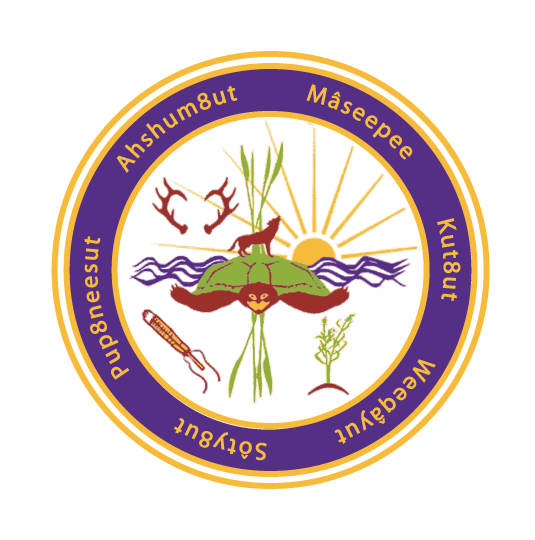

Our Circle Continued
We write, and you learn about the first humans here in America—Indigenous “People Of The First Light”—and Columbus did not “discover” us! This is a horrible myth written in the history books; He did not even get to America.
Today, our country is still at war regarding the racism discourse that, for us (and most tribes), began many moons ago, because of Western Europeans who colonized America. Vine Deloria Jr., Standing Rock Sioux, says, “American Indians are the oldest and most persistent of all the racial and ethnic minorities in our society. Their origin on this continent is still a matter of serious debate.”
However, the academic research of my people can be hurtful and even painful to digest. Many papers and books often wind up thrown in the corner of the room. But guess what? That is not the answer!
I am aware that some of you—as a matter of fact, too many—may not know of the discriminating methods and ideologies imposed on Indigenous people. Commissioner Thomas Jefferson Morgan wrote in his 1889 annual report to the Secretary of the Interior that “the Indian must conform ‘to the white man’s way,’ peaceably, if they will, forcibly if they must” (cited by Jon Reyhner, Northern Arizona University, 2002).
Most of the historical literature is not readily available, and most of the contemporary literature depicts us as having met the Pilgrims in 1620 and sharing beans, corn and squash. So mistaken.
Further accounts say that there was one Wampanoag left named Squanto; King Philip made war against the Europeans because he was considered a defiant Indian; and later, we all perished or fell off the face of the Earth. I hope you know this is not the truth at all.
I will concentrate on the 17th-century colonial events, which contributed to the transformation of the Wampanoag roots of education and culture into the English lifestyle. The English, of course, thought that their culture was higher ranking and that Indigenous people should be civilized like them, in order for the English to conquer and own Wampanoag homeland.
Perhaps I should stop here, but oh, no, I have more for you to learn. Anglo-American colonizers felt it was their responsibility and God-given right to give the Natives “civility for their bodies before Christianity for their souls.” This was not only true of the Anglo-American forefathers, but also of other European powers during the same time frame.
The red people’s religion was considered salacious in the eyes of the so-called black robes, the Jesuit priests, who thought their lifestyle was deemed to be wanton and unproductive, and that they were devoid of any foreseeable culture...
In Massachusetts, the pedagogical frameworks instituted by the colonists were structured to indoctrinate young boys and adults, in particular, to be teachers and ministers. This process would bring them to civility, according to the English theory. James Axtell, American Indian historian, mentions that “the best way to introduce Indian children, primarily boys, to civility was to send them to English schools and colleges; sexually segregated, morally guarded, classically oriented, rigorously disciplined and dominated, the schools were used as a means for improving Native people and their society.”
Massachusetts has been considered the first influence in the area of formal schooling in America. The towns were required to provide schools and keep watch and ward against the Indians (George H. Martin, “The Evolution of the Massachusetts Public School System,” 1902).
Believe me, I learned this only too well while working in the Mashpee Public Schools for 26 years as director of Indian Education. I recall several incidents, but will explain one. In the Mashpee High School hallway, there were flags hanging, representing many states and countries. The principal at the time would not put up our Mashpee Wampanoag flag. I planned a meeting with our Tribal leaders at the school. And yes, the flag went up.
Former Tribal Chief Flying Eagle (Earl Mills Sr.) said, “You fight, even if you may not stand a chance of winning. You’ve got to get some self-respect or you might as well die” (Boston Sunday Globe, 1982, article by Joseph B. White).
Joan Tavares Avant
Deer Clan Mother

